
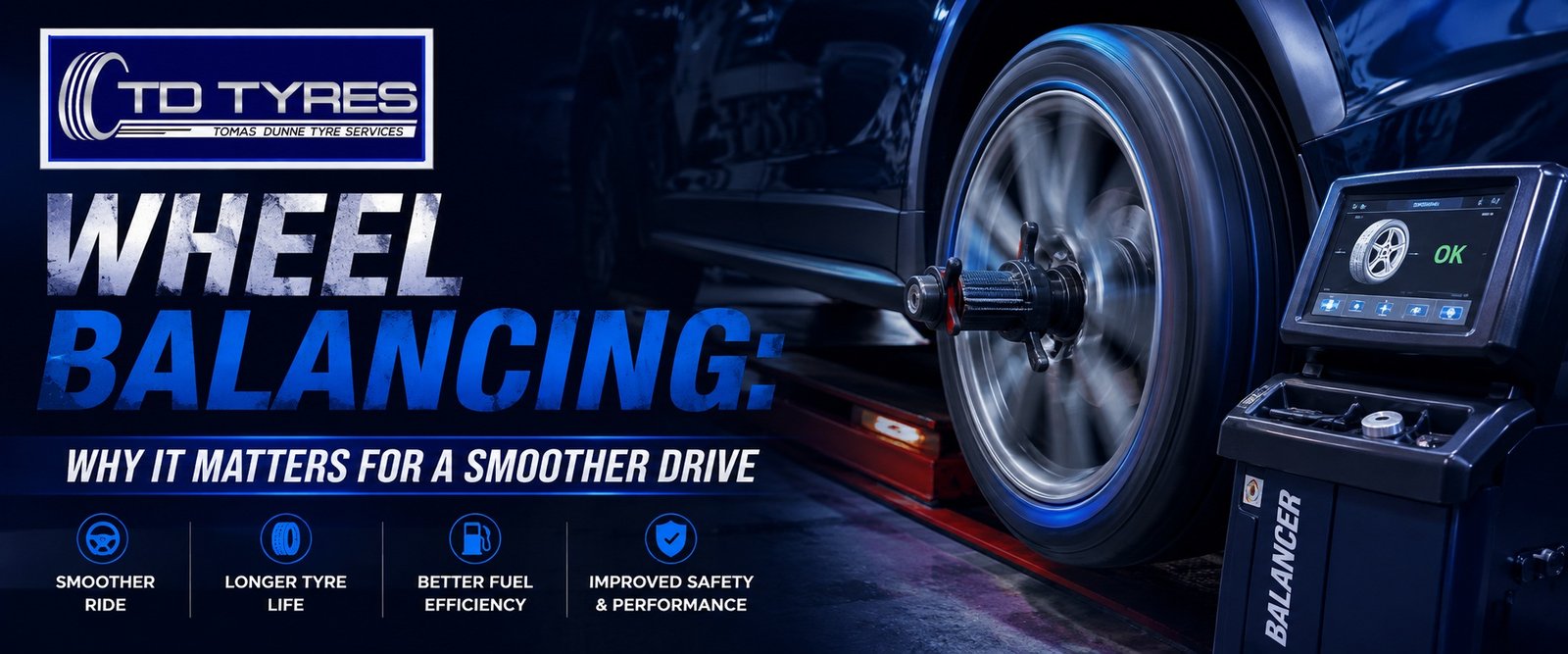
A smooth and comfortable drive depends on more than having good-quality tyres. Your wheels also need to rotate evenly and remain properly balanced. When the weight around a wheel is unevenly distributed, you may notice vibrations, uneven tyre wear, or changes in the way your vehicle handles. Regular maintenance can help identify these issues before they become more expensive problems.
For drivers in Wexford, wheel balancing is an important part of routine tyre and vehicle maintenance. TD Tyres provides professional tyre services to help motorists maintain safer, smoother, and more comfortable journeys. Whether you have recently fitted new tyres or have started noticing vibrations while driving, checking your wheel balance can be a sensible step.
What Is Wheel Balancing?
Wheel balancing is the process of ensuring that the weight of a wheel and tyre assembly is distributed evenly around its centre. Even when a tyre and wheel look perfectly normal, small differences in weight can affect how they rotate.
During balancing, the wheel is mounted on specialist equipment that identifies areas where the weight distribution is uneven. Small balancing weights can then be added to the appropriate areas to correct the imbalance.
This process allows the wheel to rotate more consistently and can improve the overall driving experience.
Why Is Wheel Balancing Important?
Your tyres are in constant contact with the road. At higher speeds, even a relatively small imbalance can become noticeable. An unbalanced wheel may create vibrations that travel through the steering wheel, floor, or seats.
Professional wheel balancing can help address these issues and support smoother vehicle operation.
Some key benefits include:
Smoother Driving
One of the most noticeable advantages is improved driving comfort. Correctly balanced wheels rotate more evenly, helping reduce unwanted vibrations.
More Even Tyre Wear
An imbalance can contribute to uneven wear across the tyre tread. Correcting the balance helps the tyre maintain more consistent contact with the road.
Reduced Strain on Components
Persistent vibration can place additional stress on certain steering and suspension components. Maintaining balanced wheels can help reduce unnecessary strain.
Better Driving Comfort
A vehicle that drives smoothly is more comfortable, particularly during longer journeys or motorway driving.
Improved Tyre Performance
Proper wheel maintenance can help your tyres perform more consistently and may contribute to longer service life when combined with correct inflation and alignment.
Signs Your Wheels May Need Balancing
Knowing the warning signs can help you address a problem before it becomes more noticeable. You may need to have your wheels checked if you experience:
- Vibrations through the steering wheel
- Shaking that becomes more noticeable at higher speeds
- Uneven or unusual tyre wear
- A vehicle that feels less smooth than usual
- Steering wheel vibration during motorway driving
- Recent tyre replacement
- A balancing weight that has fallen off
Not every vibration is caused by wheel imbalance. Issues involving wheel alignment, suspension components, tyre damage, or other mechanical parts can create similar symptoms. For this reason, professional inspection is recommended rather than assuming that balancing is the only solution.
When Should You Have Your Wheels Balanced?
There is no single interval that applies to every vehicle. Your driving conditions, tyre condition, road surfaces, and vehicle usage can all influence how frequently balancing may be required.
It is particularly sensible to consider a balance check when fitting new tyres. New tyres can require balancing after installation because the tyre and wheel need to work together as one rotating assembly.
You should also consider having your wheels checked after:
- Installing a new set of tyres
- Removing and refitting tyres
- Hitting a pothole or kerb
- Experiencing unusual vibrations
- Noticing uneven tread wear
- Losing a wheel balancing weight
- Carrying out certain wheel or tyre repairs
If you are unsure whether your vehicle needs wheel balancing, a professional tyre technician can inspect the wheels and determine whether an imbalance is present.
Wheel Balancing vs Wheel Alignment
Wheel balancing and wheel alignment are sometimes confused, but they address different issues.
Wheel balancing focuses on the distribution of weight around the wheel and tyre assembly. Its main purpose is to ensure smooth rotation.
Wheel alignment, on the other hand, concerns the angles of the wheels relative to the vehicle and the road. Incorrect alignment can cause the vehicle to pull to one side, create uneven tyre wear, or affect steering behaviour.
A vehicle can require balancing, alignment, or both. If you are experiencing steering or tyre-related problems, a professional inspection can help identify the actual cause.
How the Wheel Balancing Process Works
Professional balancing is a straightforward process, but it requires suitable equipment and accurate measurements.
First, the technician removes the wheel and places it on a balancing machine. The equipment spins the wheel and detects areas where the weight distribution is uneven.
The technician then adds small weights to specific points on the wheel. The wheel is tested again to confirm that the imbalance has been corrected.
Once the wheel is properly balanced, it can be refitted to the vehicle.
The accuracy of the process matters because even a small imbalance can become more noticeable as the wheel rotates at higher speeds.
Why Professional Tyre Service Matters
Tyres play a major role in braking, steering, handling, and road contact. That’s why tyre maintenance should not be treated as something to address only when a problem becomes serious.
Choosing an experienced tyre service provider gives you access to the appropriate equipment and professional knowledge needed to identify common tyre and wheel issues.
TD Tyres supports motorists with a range of tyre-related services, including tyre repairs, replacements, wheel alignment, wheel balancing, and puncture repairs. A professional approach helps ensure that your vehicle receives the appropriate service based on its condition.
Protect Your Tyres with Regular Maintenance
Wheel maintenance works best when it forms part of a broader tyre care routine. Drivers should regularly check tyre pressures, inspect tread condition, look for visible damage, and pay attention to changes in vehicle handling.
It is also important to avoid ignoring new vibrations or unusual tyre wear. A small issue can sometimes indicate a problem that needs attention.
Regular wheel balancing can be particularly useful after fitting new tyres or when you notice vibration at certain speeds. Combined with correct tyre pressure, alignment checks, and routine inspections, it can help keep your vehicle performing smoothly.
Why Choose TD Tyres?
For motorists in Wexford, choosing a local tyre specialist can make routine vehicle maintenance more convenient. TD Tyres has more than a decade of experience providing tyre-related services and focuses on practical solutions for local drivers.
The team can assist with a variety of tyre requirements, from puncture repairs and tyre replacements to wheel alignment and balancing. Their customer-focused approach makes it easier for motorists to discuss concerns and understand which service their vehicle may require.
Whether you’re preparing for a long journey or simply noticing a vibration that wasn’t there before, getting your wheels inspected can provide valuable peace of mind.
Frequently Asked Questions
What does wheel balancing do?
It corrects uneven weight distribution in a wheel and tyre assembly, helping the wheel rotate smoothly and reducing vibrations.
How do I know if my wheels are unbalanced?
Common signs include steering wheel vibrations, shaking at certain speeds, and uneven tyre wear. However, similar symptoms can have other causes, so professional inspection is recommended.
Is balancing required when fitting new tyres?
It is generally recommended to balance the wheel and tyre assembly when new tyres are fitted to help ensure smooth rotation.
Is wheel balancing the same as alignment?
No. Balancing corrects weight distribution, while alignment adjusts the angles of the wheels relative to the vehicle and road.
How often should wheels be balanced?
There is no universal interval. A balance check is advisable when fitting tyres, after certain impacts or repairs, or whenever you experience unusual vibration.
Keep Your Drive Smooth
Small wheel and tyre issues can have a noticeable effect on driving comfort and tyre performance. Paying attention to vibrations, uneven wear, and changes in handling can help you identify problems early.
With professional wheel balancing, regular tyre inspections, and appropriate maintenance, motorists can help keep their vehicles running smoothly and their tyres performing effectively.
For reliable tyre care and professional wheel services in Wexford, TD Tyres can help assess your vehicle and recommend the appropriate service for your needs.
Leave a Reply